
Heating cable or mat in the pour
01
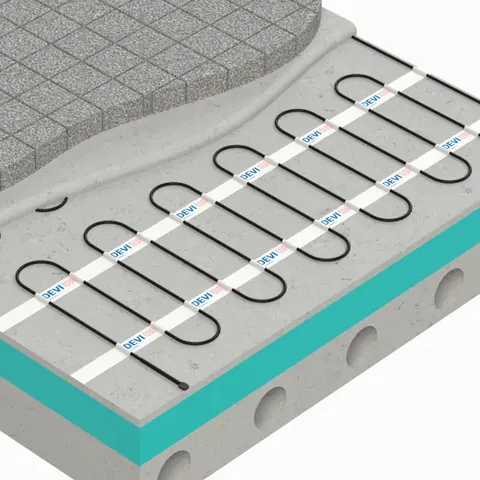
Twin-conductor mat or loose cable, fixed to the reinforcement and buried in the pour.
Electric heating systems, supplied wholesale from Edmonton across Western Canada.

Cable in the paving, a ground sensor reading moisture and temperature, and a surface that is above freezing before the snow lands.
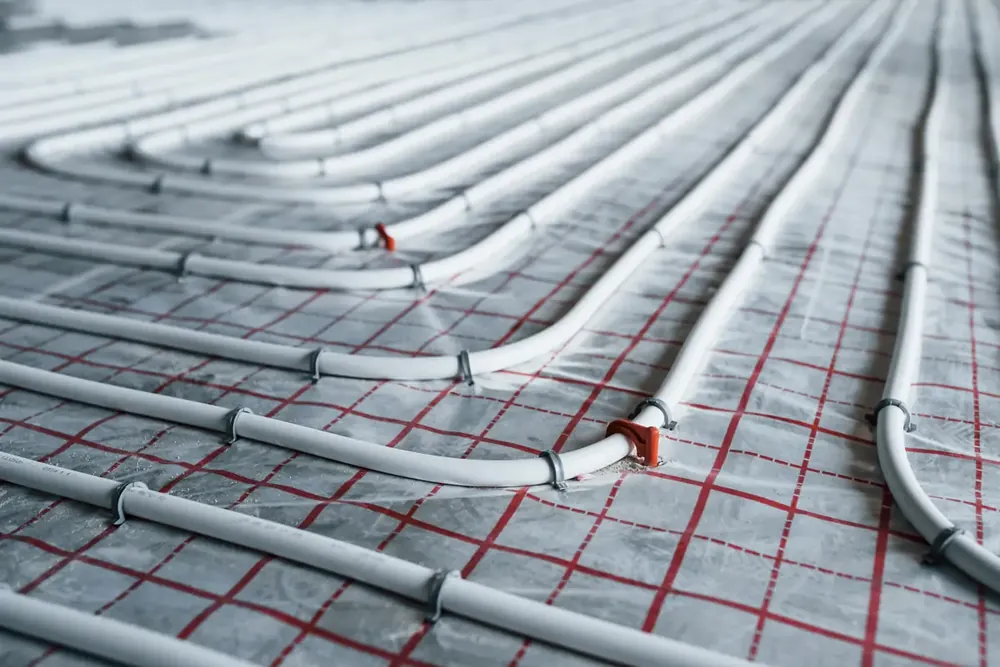
Most of the cost and nearly all of the maintenance in a heated slab sits in the plant room, not in the slab. Electric takes the plant room out of the drawing.
Set once, in the pour. No plant room, no fluid, nothing to bleed or refill.
Which components a given project actually sheds depends on the application, and both systems still need design, a load calculation and an electrician. The point is not that electric is always right; it is that on many jobs it removes a mechanical scope, a trade and a service contract, and that changes the number before the heating even runs.
A hydronic slab needs a plant room. An electric slab needs four things.
Twin-conductor mat or loose cable, fixed to the reinforcement and buried in the pour.
Reads moisture and temperature in the slab, so it is above freezing before snow lands.
Runs the system from the sensors, with a manual override and an adjustable drying delay.
208 to 600 V, with 30 mA ground-fault protection at the panel.
Mat or loose cable, fixed to the reinforcement and buried in the pour. The spacing comes off the layout drawing, not off a rule of thumb, and once the surface is down there is nothing above it to see or service.
Twin conductor · 398 or 538 W/m² (37 or 50 W/sq ft) · rated to 105 °C (220 °F) · 208 to 600 V
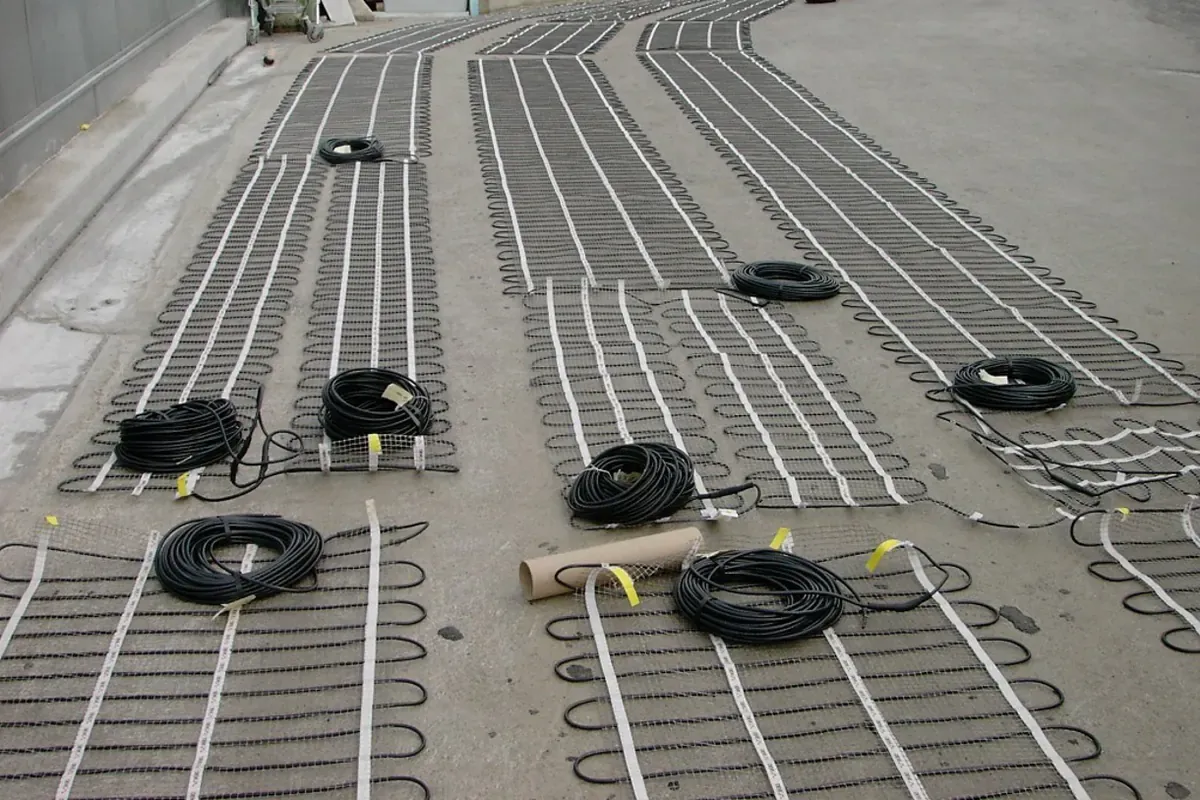
A heated driveway is poured once, and then it is simply part of the driveway.
Nothing to store, no contractor to wait for at six in the morning, and no salt working its way into stone, steel and landscaping. The system runs only while it is melting, and only when its own sensors say so.
Look under the surface
The cable is tied to the reinforcement mesh and buried mid pour. What is left on the surface is an ordinary driveway that happens to be dry. The build up changes with what you are laying.
Finished surface. Nothing is visible once the pour cures.
Heating cable at 100 mm centres, held mid slab so the pour surrounds it.
Fixing strip tying the run to the mesh at a set spacing.
Compacted base with perimeter insulation, so the heat goes up and not into the ground.
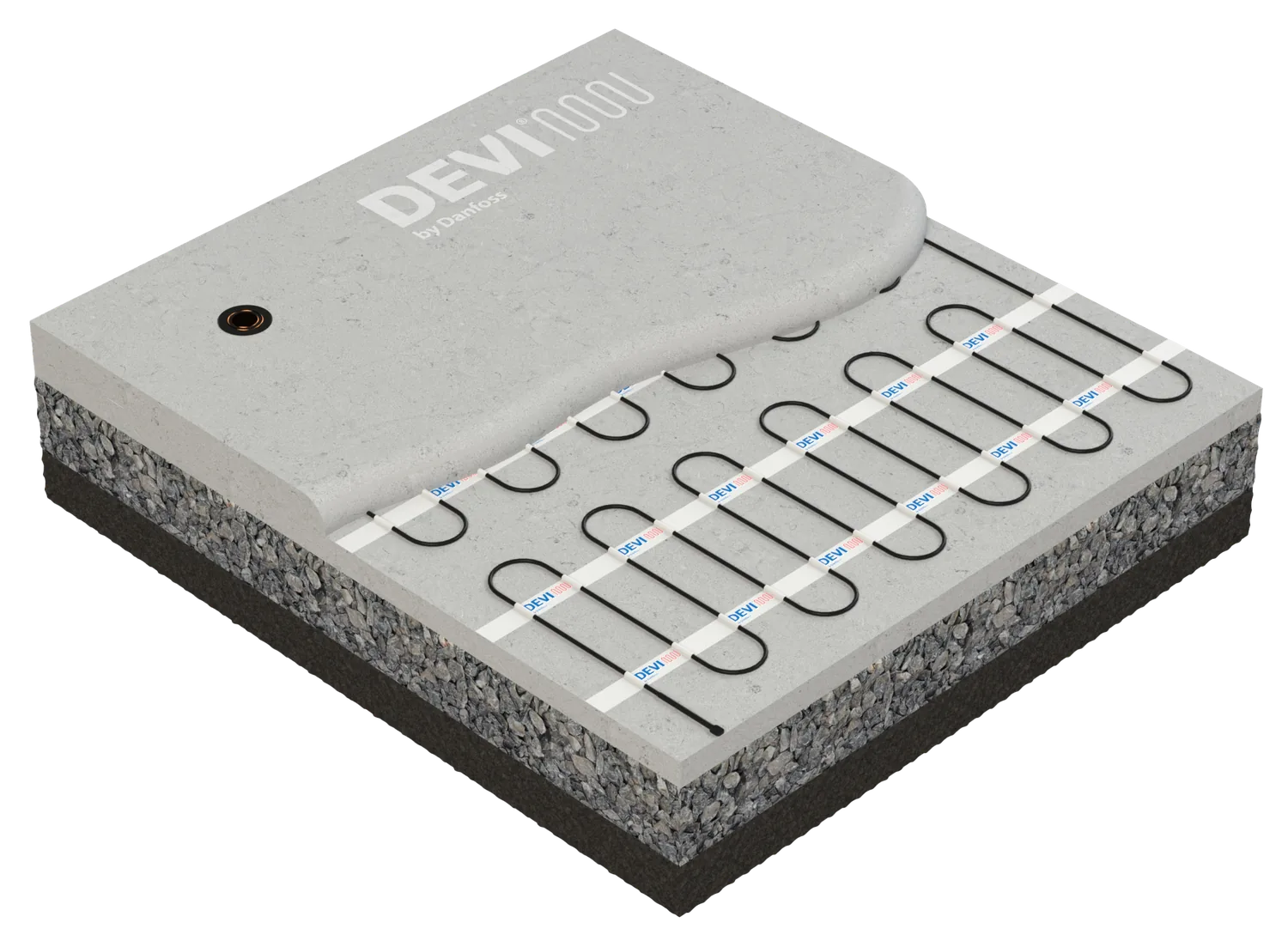
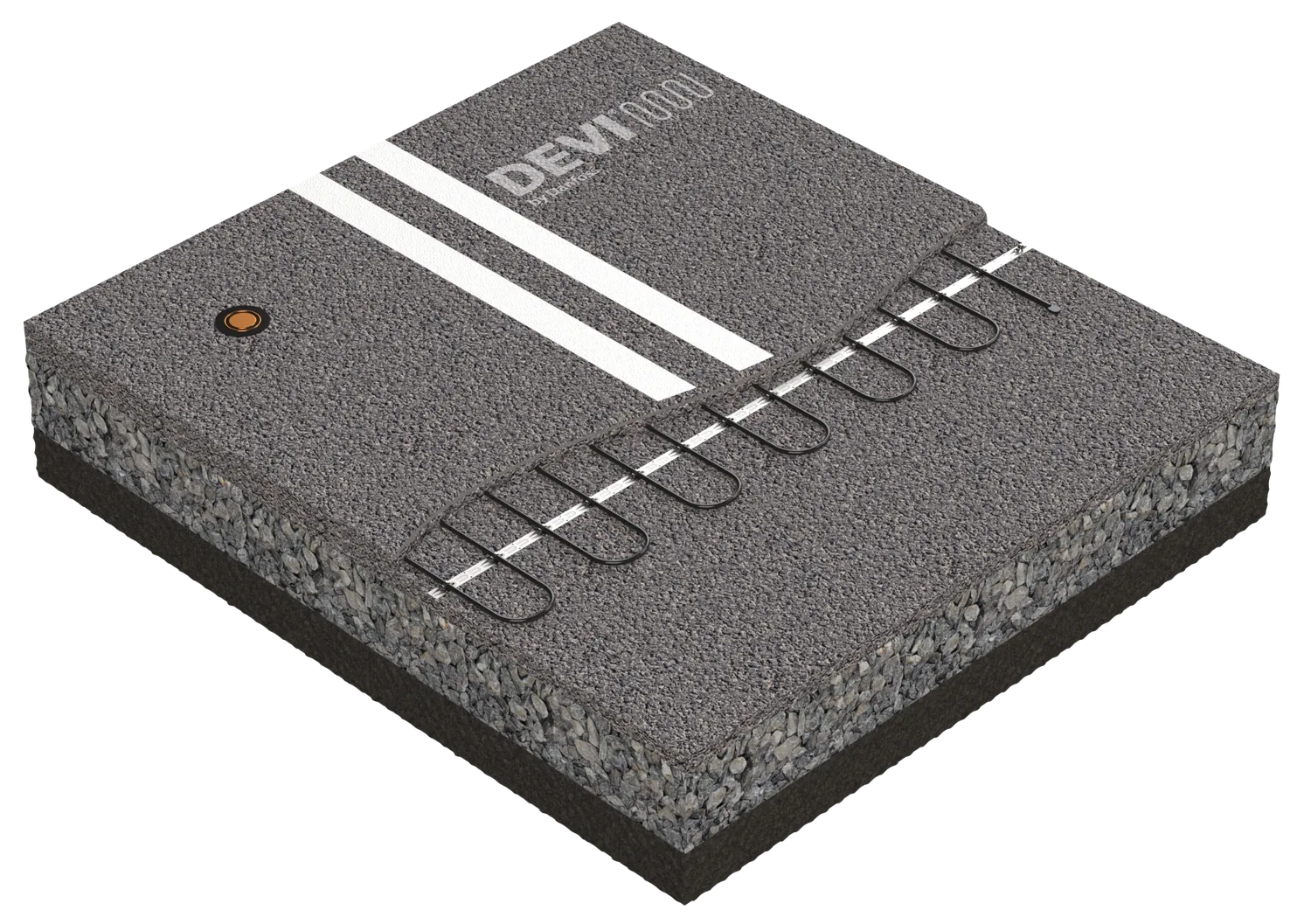
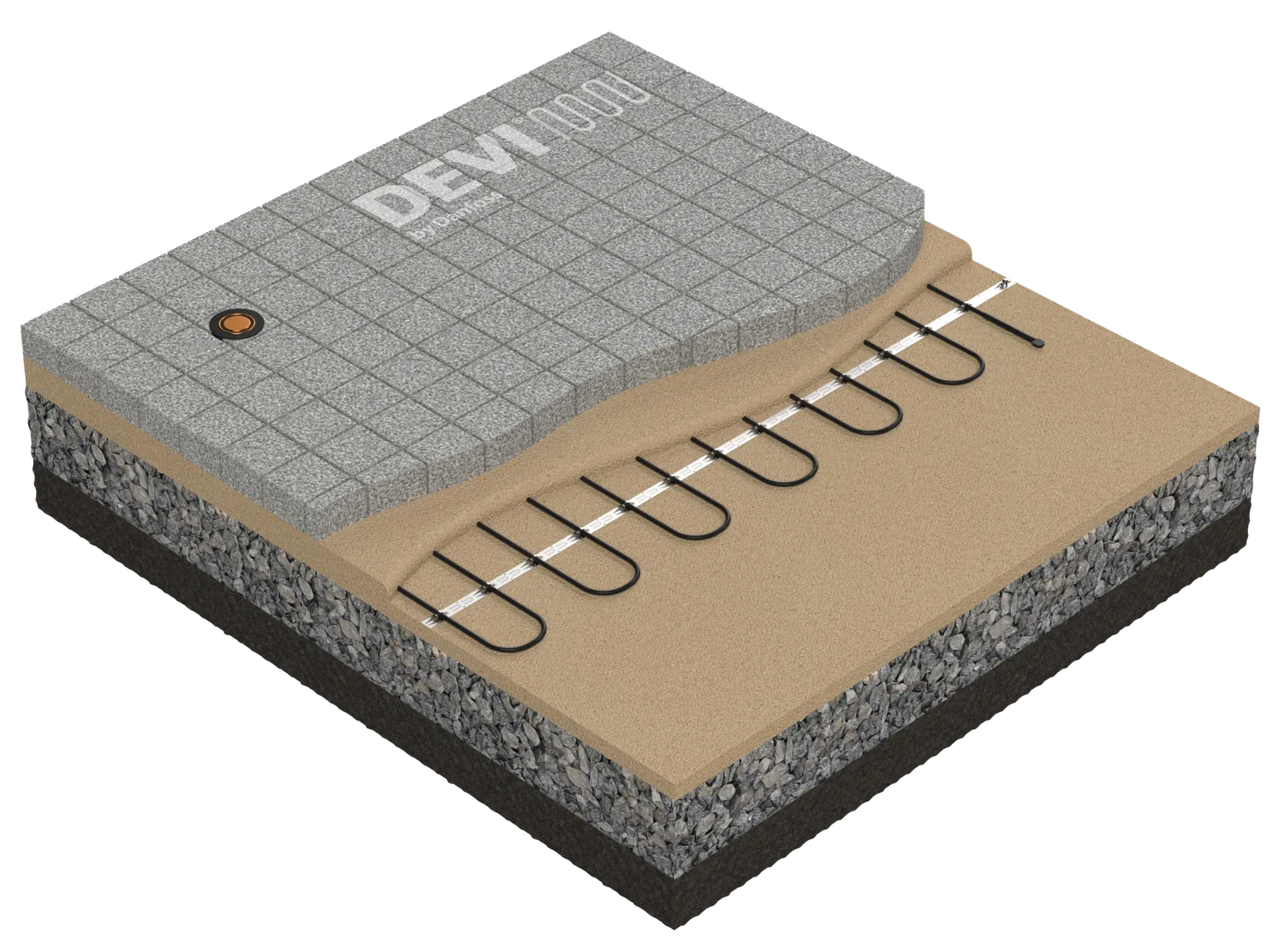
Six layers go in, in this order, and only the last one is ever seen again.
Compacted base. A drained granular base, compacted. Everything above it is only as good as this is.
Insulation. Board under the slab and at the perimeter, so the heat goes up into the surface and not down into the ground.
Reinforcement. Mesh through the middle of the slab. It is the structure, and it is also what the cable is tied to.
Cable at 100 mm centres. Twin conductor on fixing strip, at the spacing the layout drawing calls for. Nothing here is a rule of thumb.
The pour. Concrete goes down over the run and surrounds it. From this moment the cable is not accessible again.
In service. The surface is the only thing anyone sees. It is warm from underneath, so snow does not get the chance to settle.
Every job starts as a drawing. Area, watt density, cable spacing, sensor positions and connected load are settled on paper before a reel is opened, because the cable is set once and the surface goes down on top of it.
The system goes in once, under a surface nobody will lift again for decades. Danfoss ties the twenty year warranty to a resistance reading at three separate points, and that is the part a general trade tends to skip.
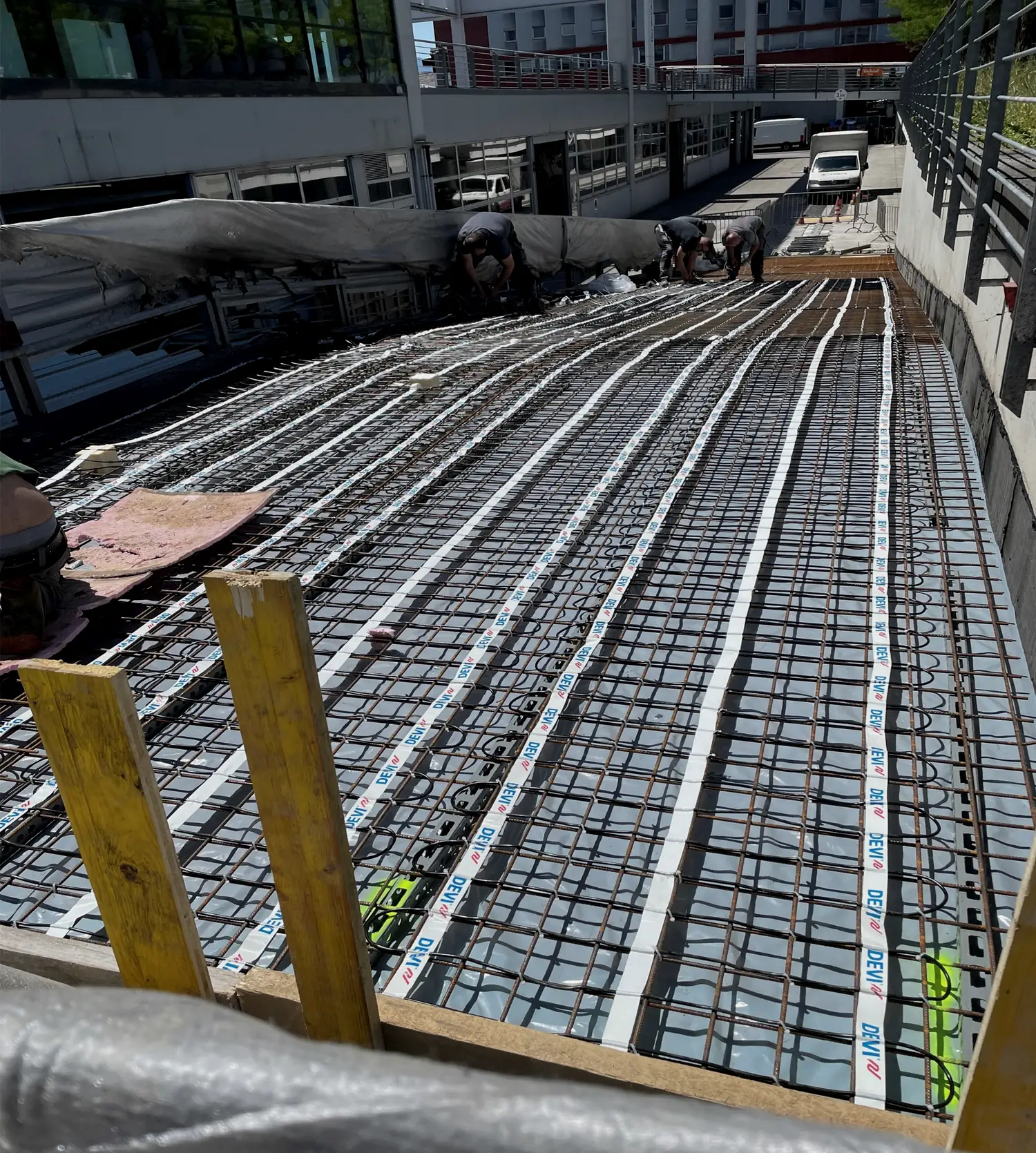
Well drained base, with insulation below and at the edges of the slab.
Ohm reading taken before anything is unrolled, to prove the cable did not take damage in transit.
Cable tied to the mesh on the spacing the layout drawing calls for, with ground sensors at opposite ends of the heated area.
Second reading once everything is fixed and the cold leads are run back to the panel.
Concrete or hot mix goes down over the cable. The final reading is what closes the warranty file.
Panel, controller and sensors set to a slab trigger temperature, so the surface is already warm when the snow arrives.
It draws power only while it is melting. Put your own surface and your own utility rate against it.
75 m² at 538 W/m², held for 5 hours
Against a season of ten snowfalls, that is $220.00. Put your own callout rate beside it.
Output bands and substrates are published by Danfoss A/S for the GX range. Which band a given job takes depends on exposure, drainage and the snowfall it has to clear, and that is settled on the layout drawing rather than from a table.
Method published by Danfoss: area multiplied by watts per square foot, divided by 1000, multiplied by rate and hours. Load figures size the electrical service. They are not a quotation.
Named by what you are heating rather than by part code, because that is how a job arrives. The Danfoss line behind each one is on the right.
Where the Dry-Ways name comes from. Cable and mats set beneath the surface so snow and ice do not accumulate, reducing manual clearing and de-icing through the winter.
Driveways, sidewalks, ramps and entrances
Heating cable installed within concrete slabs for residential and commercial space heating. Comfort heating for a floor, or the primary heat source for a building.
Floors, garages, workshops, warehouses
Manages snow and ice around the drainage path, reducing ice dams, frozen downspouts and the damage that follows when meltwater has nowhere to go.
Roofs, gutters, eaves, downspouts
Freeze protection and process temperature maintenance for industrial piping and equipment, specified against the medium, the environment and the temperature the process has to hold.
Oilfield, process piping, tanks, valves, pumps
Controlled heat into frozen ground so construction can carry on through cold weather, instead of waiting for a thaw or paying for hoarding and fuel.
Frozen soil and concrete on site
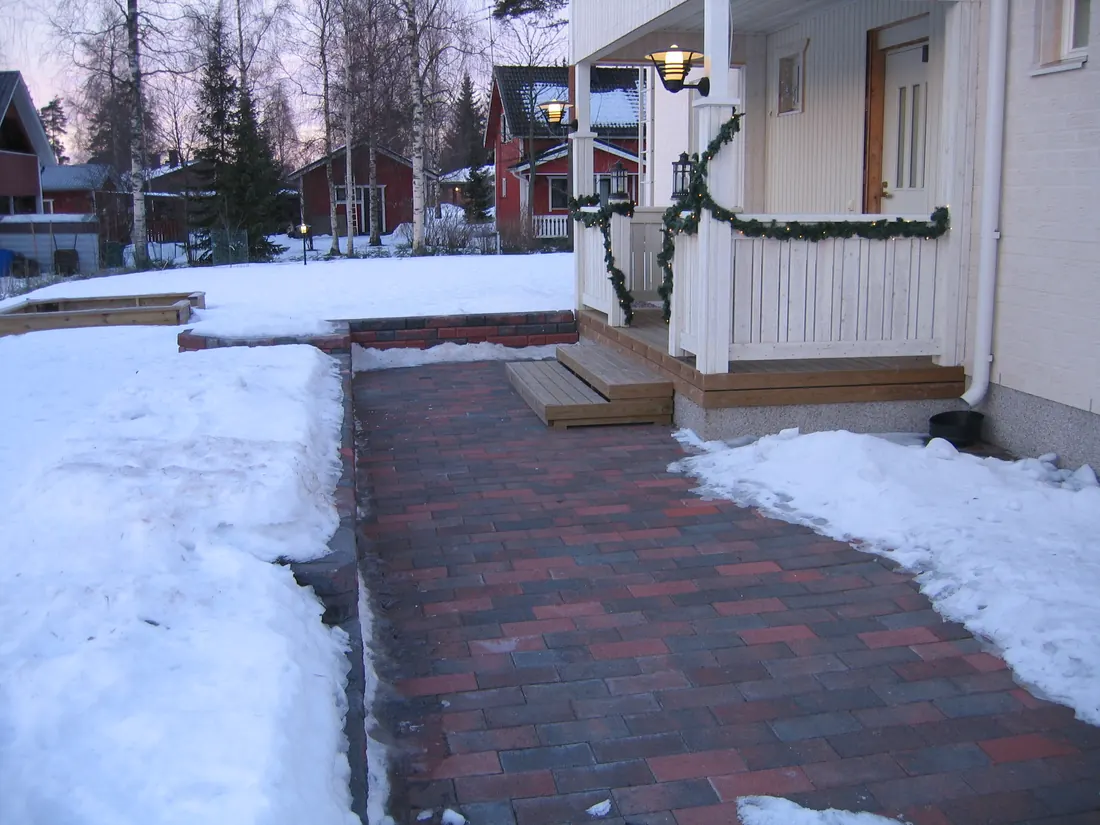
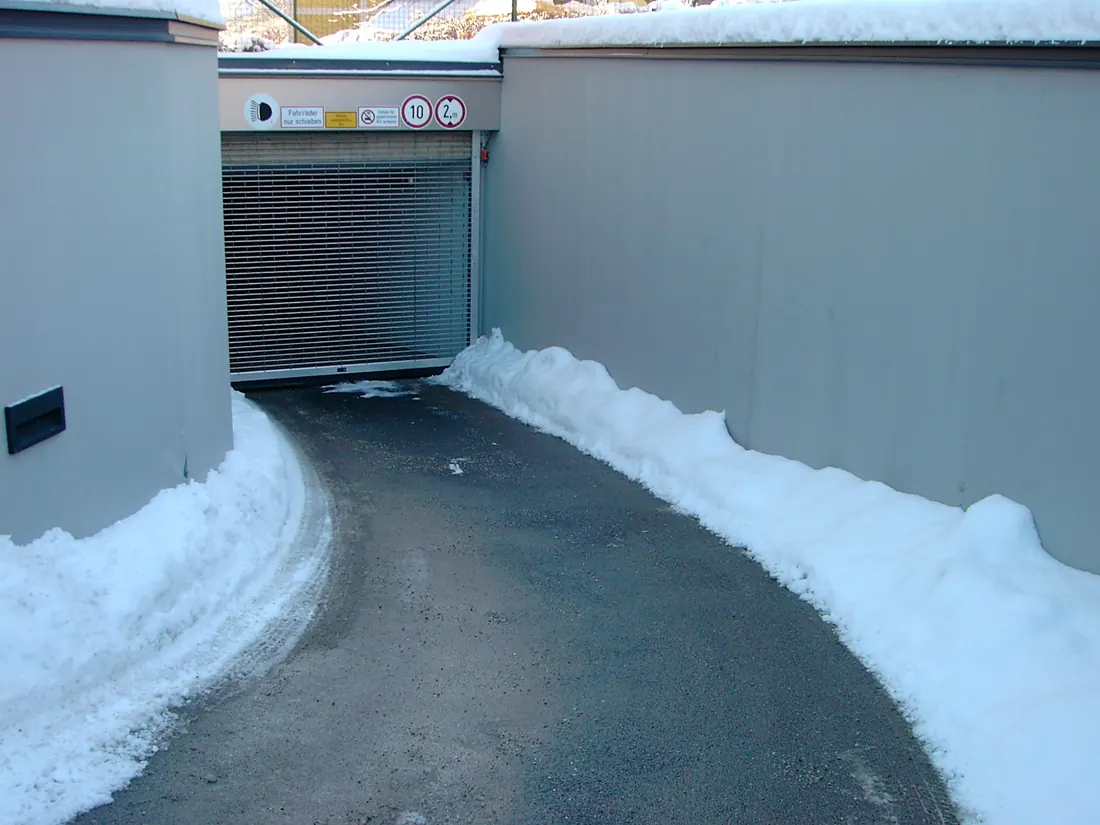
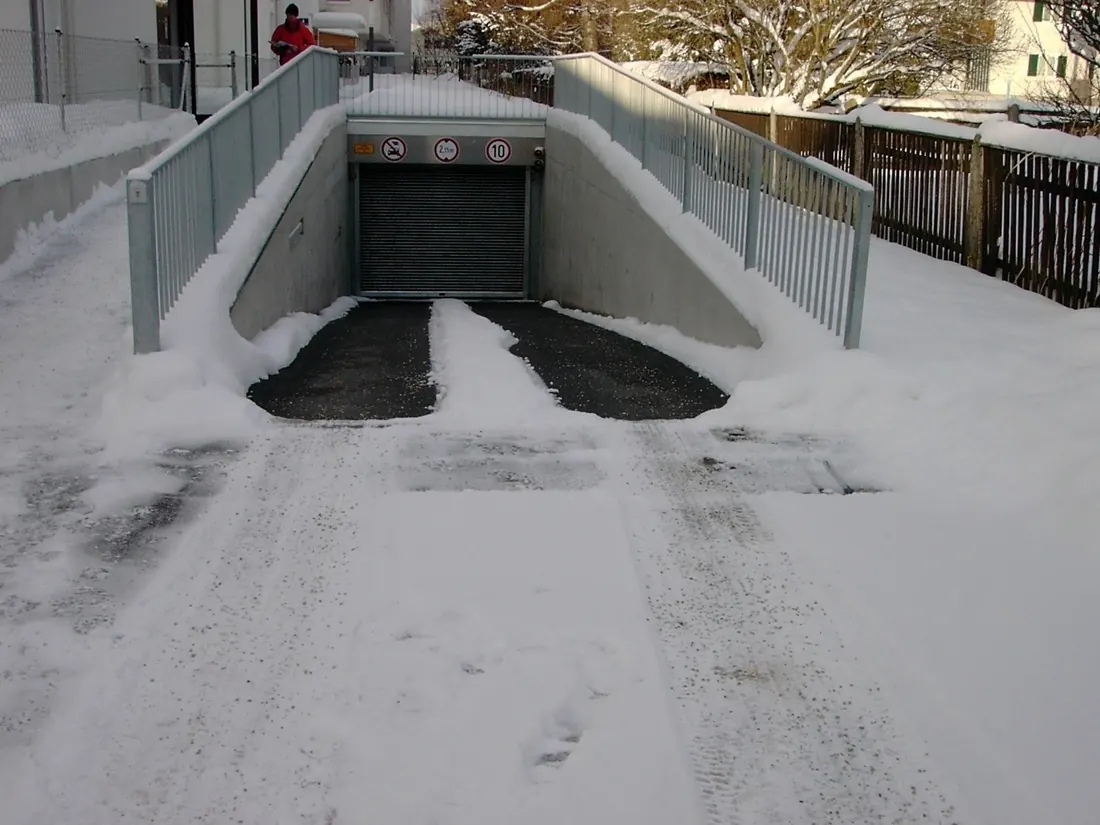
No ridge of ice at the bottom of the ramp, no salt line up the walk, no pile of cleared snow to put somewhere. The surface is the only thing that changed.
Eight answers, each sourced from the Danfoss material and attributed where the work behind it was not ours.
Not here? Send us the surface or call 780-953-9297.
The controller reads ground sensors for moisture and temperature, so the slab is already above freezing when snow starts falling rather than warming up after it lands. Danfoss ran 743 square metres on this system at Canalside in Buffalo through a winter that dropped 2.8 m, at 538 watts per square metre with a minus 1 degree Celsius slab trigger. Danfoss case study. That was a Danfoss project delivered by other contractors, not a Dry-Ways installation.
No. The cable is set mid pour, or in the bedding layer under stone. It goes in with new concrete, new asphalt, or when existing pavers are lifted and reset. If you are resurfacing anyway, that is the moment.
The cable is rated to 105 degrees Celsius, which is 220 degrees Fahrenheit, which is above hot mix asphalt temperature, so it survives the pour it is buried in. It is twin conductor, which cancels its own electromagnetic field. Danfoss GX specification.
Three resistance readings are taken during installation, on delivery, before the pour and after it, and the readings are what the warranty rests on. A repair kit exists for the cable itself. A metal nameplate is embedded in the finished surface under NEC 426-12, so any trade working on that surface in future knows the system is there before they cut.
No. The controller runs it automatically from the sensors, with a manual override and an adjustable delay so it keeps running long enough to dry the surface rather than leaving a film to refreeze. Danfoss GX controls.
It depends on the area and the output. The running cost panel gives the connected load for your numbers, which is the figure an electrician sizes the service against. The range runs 208 to 600 volts, with ground fault protection available on the panel.
Twenty years on the mats and cable, two years on controls and sensors. Both are the manufacturer's terms, and the cable warranty depends on the resistance readings having been taken and recorded during installation. Danfoss warranty terms, stated here as manufacturer terms.
It only draws power while it is melting. Put your own area and utility rate into the running cost panel for a figure per snowfall.
Area, what it is made of, and whether the concrete is already down. That is enough to come back with a layout, a connected load, and a number.
Or send it straight to info@dryways.ca.
“We met on job sites, and that is still how we think about this. We are not trying to sell you a box; we are trying to work out what the job actually needs and get it to you without a delay.”