
Roofs
Along the cold edge where melt from the warm part of the roof arrives and stops. This is where a dam starts, and it is the first run on most layouts.
Eaves, edges, low-slope areas
Danfoss RX
Residential kits
Residential kits
Manages snow and ice around the drainage path, reducing ice dams, frozen downspouts and the damage that follows when meltwater has nowhere to go.
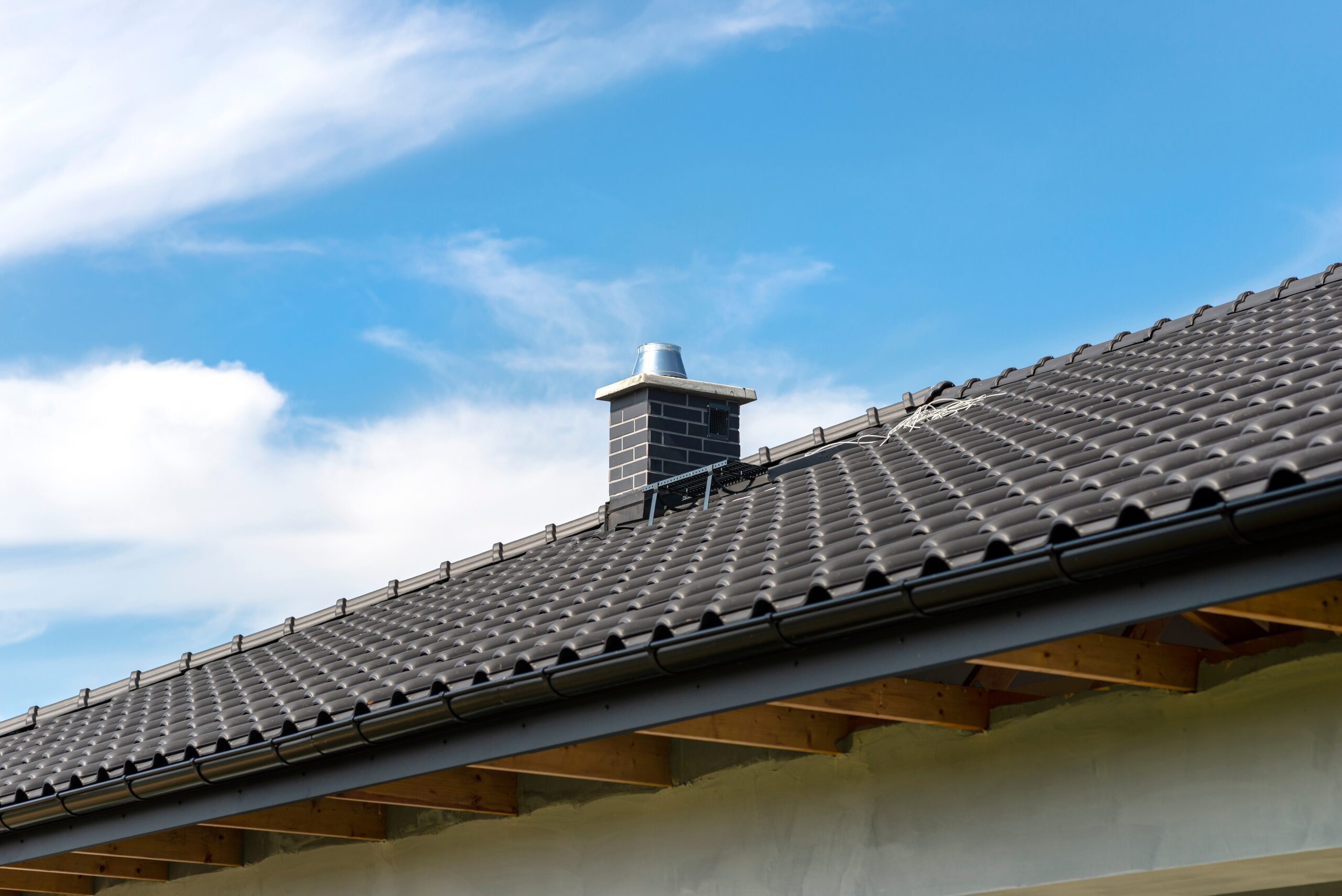
Cable is run along the path meltwater has to take to get off the roof, so that path stays open while the rest of the roof is still frozen.
Snow on a roof melts from underneath, runs down to a cold edge, and freezes there. What forms is a dam, and the water backing up behind it is the part that does the damage.
The system does not clear the roof. It keeps a route open — down the eave, into the gutter, through the downspout and away — so meltwater leaves instead of standing behind ice and finding its way under the covering.
The cable is self regulating: its output responds to the temperature of what it is touching, so the run is not switched as one length. Where the cable goes, how much of it there is and what controls it are settled on a layout drawing for the roof in question.
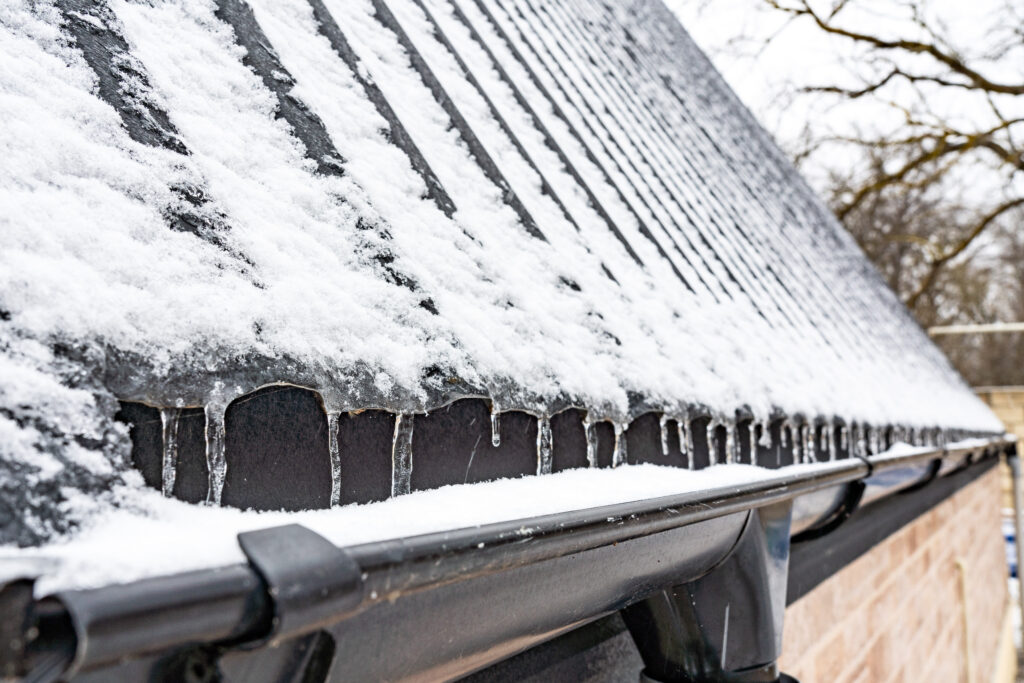
Named by the part of the building rather than the part code. The Danfoss line behind each one is on the right.
Along the cold edge where melt from the warm part of the roof arrives and stops. This is where a dam starts, and it is the first run on most layouts.
Eaves, edges, low-slope areas
A gutter that freezes solid stops being drainage and becomes a shelf. Cable run through it keeps a channel open along its length.
Gutters and troughs
The overhang sits outside the heated envelope, so it is colder than the roof above it for most of the winter. It is the part of the path that freezes first.
Overhangs, soffits, fascia lines
The drop is no use if it is plugged. Cable carried down the spout keeps the route continuous all the way to the point the water is meant to leave.
Downspouts and outlets
Manufacturer figures for the RX line, from the Danfoss catalogue. Output is not a fixed watt density on a self-regulating cable, and the values Danfoss publishes per product are settled on the layout drawing.
A roof run is exposed to everything the winter does and is awkward to reach once the weather closes in. The readings are what prove the run went up undamaged and stayed that way.
Every job starts with the drainage path.
Where melt arrives, where it stops, and where it has to get to. The run is drawn against that path first, and the cable length, the connected load and the control come out of the drawing rather than off a shelf.
Dry-Ways supplies the system and can install it. Where another contractor is doing the work, the layout, the load and the test regime are still issued with the order, because the warranty depends on them.
Roof, eave, gutter and spout taken as one route. A run that stops short of the outlet leaves the water somewhere it can still freeze.
Ohm reading taken before anything is unrolled, to prove the cable did not take damage in transit.
Cable set along the drawn path and held with the fixings specified for the roof covering it is going onto.
Second reading with the run complete and the cold leads brought back, before anything is energised.
The final reading is taken with the system in its finished state, and it is what closes the warranty file.
The control is set for the building and the season rather than left on. What is appropriate depends on the layout, and it is specified with it.
A self-regulating cable varies its own output along its length in response to the temperature around it, rather than being one fixed element switched on and off as a whole.
The colder a section of the run is, the more it puts out; the warmer it is, the less. That behaviour is the cable, not a controller, and it happens along the length rather than for the run as one thing.
The design heats a route rather than an area, so the system is sized against the drainage path the building actually has instead of its roof area.
No plant, no fluid and no moving part. Once the run is in and the readings are recorded, there is nothing on the roof to return to.
Five answers specific to roof and gutter systems. The general questions are on the homepage FAQ.
Not here? Send us the job or call 780-953-9297.
No, and it is not designed to. It keeps the route meltwater takes off the roof open — eave, gutter, downspout — so water leaves rather than backing up behind ice. Snow load is a different problem with a different answer.
No. Snow melting uses the Danfoss GX line set beneath a surface you walk or drive on. Roof and gutter work is the RX line, run along a drainage path in the open. The two are specified separately and are not interchangeable.
Both. Danfoss publishes residential kits and a commercial RX-C line, and which one a building takes comes out of the layout rather than out of the building type.
It should not have to. The control is part of the specification, and what is appropriate for a given building is settled with the layout rather than assumed.
That depends on the length of the run and how the control is set, so it is answered against a layout rather than in general. The running cost panel on the homepage is built for the snow-melting case and does not answer this one.